



How to make your garden safe for hedgehogs in Summer
Summer is a critical season in the hedgehog calendar. From May through to September, hedgehogs forage nightly, raise hoglets, and build vital fat reserves for winter hibernation. Knowing how to help hedgehogs in summer is one of the most valuable things a gardener can do, and the steps are simpler than you might think.
UK hedgehog numbers have collapsed from an estimated 30 million in the 1950s to fewer than one million today, placing them on Britain’s red list for mammals. Because one in three hedgehogs now relies on suburban and urban green spaces, every wildlife-friendly garden makes a measurable difference.

Ordinary features like ponds, netting, strimmers, slug pellets, and open drains pose genuine threats to nocturnal visitors. Understanding how to help hedgehogs starts with identifying and removing these hazards. Read on to discover how to make your outdoor space a genuine sanctuary for your regular nightly visitors.
Make your pond safe for hedgehogs
Ponds are a wonderful garden feature with all the animals they attract, but they can be lethal for hedgehogs. Although capable swimmers, they will tire quickly and drown if a pond has steep, vertical sides with no escape route. To make a garden pond safe for hedgehogs:
-
Create at least one gently sloping side using a plank of untreated wood, brick steps, or a ramp of rigid wire mesh.
-
Place rocks or large pebbles in the shallows to give small animals a foothold.
-
Keep netting well away from the pond edge; loose netting around water is a dual hazard (see below).
-
Ensure the water level sits high enough that any escape route is reachable.

If you have a swimming pool, the same logic applies. A rigid mesh ramp trailing into the water (held in place by a weight on the pool surround) can save a hedgehog’s life. Avoid soft, bubble-wrap-style pool covers: hedgehogs can become trapped underneath. Of course, making a water feature safe for ground-dwelling wildlife is only half the battle; you may also need to secure the pond's inhabitants from aerial predators. If you are dealing with feathered visitors, see our guide on How to Stop Herons Eating Pond Fish to protect your entire aquatic ecosystem.
Always check before you strim or mow
Strimmers and lawnmowers are among the most common causes of hedgehog injury in the UK. Hedgehogs shelter in long grass, bramble patches, compost heaps, and areas under hedges during the day. Their natural defence is to curl into a ball when threatened, which offers no protection against rotating blades.

Before using any cutting equipment, always walk slowly through the area you plan to work in, checking for curled-up hedgehogs. To know how to help a hedgehog, pay particular attention to:
-
Long grass and meadow areas
-
Beneath hedges, sheds, and decking
-
Compost heaps and leaf piles
-
Dense planting and bramble patches
If you find a hedgehog, move it gently to a safe, sheltered spot nearby. Use the same caution with garden forks in compost heaps, turning the soil slowly to avoid injury.
Keep garden netting off the ground
Garden netting is one of the most underestimated hazards for hedgehogs. Loose or low-lying netting used to protect fruit, vegetables, or ornamental plants can trap a hedgehog’s legs, body, or spines as it passes through the garden at night. Once tangled, a hedgehog is rarely able to free itself without help, and the injuries caused by netting can be severe. To protect hedgehogs from netting:
-
Raise netting at least 30cm off the ground at all times
-
Remove or fully secure ground-level netting at dusk
-
Check netting thoroughly each morning and evening for trapped animals
-
If you find a hedgehog tangled in netting, cut it free carefully with scissors and check for injuries
-
Contact a local hedgehog rescue or the RSPCA if the animal appears injured or distressed
Stop using slug pellets and chemical pesticides
Hedgehogs are natural pest controllers, consuming hundreds of slugs, beetles, and caterpillars in a single night. They are among the most effective organic solutions to garden pests, but chemical pesticides directly undermine this. Wildlife-friendly alternatives include:
-
Copper tape or barrier gel around vulnerable plants
-
Beer traps for slugs (check and empty regularly)
-
Encouraging natural predators such as frogs, toads, and ground beetles
-
Picking slugs by hand at night and disposing of them away from the garden
A garden managed without pesticides will naturally attract more invertebrates, which in turn supports a healthier, more active hedgehog population.
Put out food and fresh water every evening
Providing supplementary food and water is one of the most direct ways to understand how to help hedgehogs in your garden. The best foods to leave out for hedgehogs are:
-
Tinned meaty cat or dog food (not fish-based varieties)
-
Dry cat or kitten biscuits, lightly crushed
-
Specialist hedgehog food, available from wildlife and garden centres
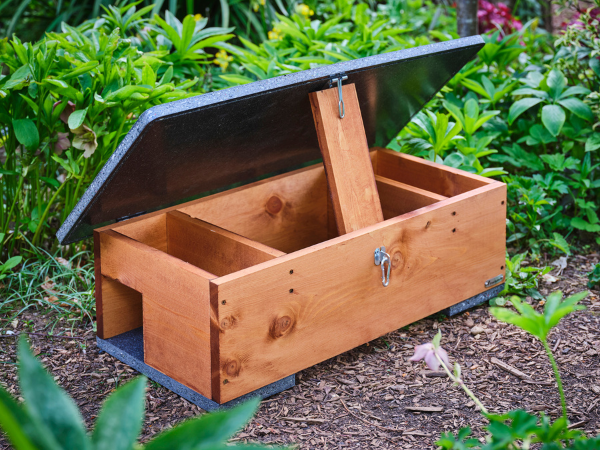
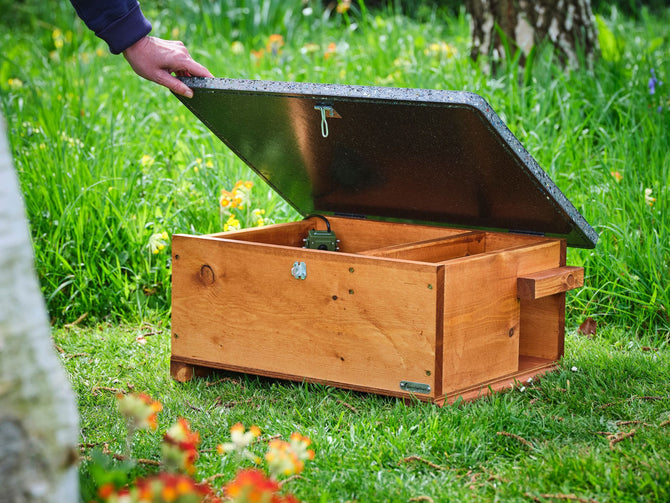
Never offer hedgehogs milk, they are lactose intolerant, and it causes diarrhoea that can quickly become dangerous. Place food in a shallow bowl and refresh it each evening, removing uneaten portions to avoid attracting rats. If local cats are visiting the feeding spot, a hedgehog feeding station, such as a box with a 13cm square entrance hole, ensures the food reaches the right animal. Knowing how to help a hedgehog visiting your garden is often as simple as setting up a consistent feeding routine.
For water, a shallow, heavy-based dish placed near the food bowl works perfectly. Refresh it daily: hedgehogs will drink from it, paddle in it, and occasionally use it as a bathroom, all of which is entirely normal.
Create a hedgehog highway through your garden
One of the most impactful and cost-free ways to understand how to help hedgehogs in summer is to make sure they can actually reach your garden. Hedgehogs can travel up to 3km in a single night in search of food and mates, but solid modern fencing blocks this movement entirely, isolating small populations.

The solution is a ‘hedgehog highway’: a 13cm square hole cut or dug at the base of your fence or garden wall. This is large enough for a hedgehog to pass through comfortably but too small for most pets. Connecting your garden to others creates a network of linked habitats. Talk to your neighbours about doing the same: a series of connected gardens, each with a small gap in the boundary, can dramatically increase the territory available to local hedgehogs and significantly improve their survival prospects.
Provide summer shelter and nesting sites
In summer, female hedgehogs need quiet, undisturbed spots to raise their young. Hoglets are born between May and September and remain in the nest for the first four to six weeks of their lives. Any disturbance to a summer nest can cause a mother hedgehog to abandon or even harm her litter. To provide suitable shelter:
-
Create Wild Zones: Leave a quiet corner of the garden completely undisturbed throughout the summer months. Areas featuring long grass, a bramble patch, or a log pile provide excellent natural nesting habitats.
-
Install Artificial Shelters: Place a purpose-built hedgehog house in a shaded, sheltered position. Line the interior with dry leaves or barley straw to make it inviting.

-
Delay Summer Maintenance: Avoid tidying or clearing out the spaces beneath garden sheds and decking between May and September, as these are premium, highly favoured nesting spots.
-
Handle Active Nests Responsibly: If you uncover an active nest while dismantling or moving a garden structure, stop work immediately and leave it completely undisturbed. Return to the project in October, by which time the hoglets will have safely left the nest.
For understanding how to help a hedgehog in winter, read our article on hedgehogs in the winter.
Cover open drains, holes, and hidden hazards
Open drains and uncovered holes are easily overlooked garden hazards. Hedgehogs investigate dark, damp spaces instinctively. They are exactly the kind of places where food is likely to be found. A hedgehog that falls into an open drain or steep-sided hole can become trapped and starve if not found and rescued.
Check that all drain covers are intact and properly fitted. Any open holes from building or landscaping work should be covered or fenced off at night. Be especially careful with:
-
Uncovered inspection chambers and soakaways
-
Gaps beneath outbuildings where the ground has subsided
-
Open trenches or foundation work left overnight
-
Litter in the garden: hedgehogs frequently get their heads stuck in tins, yoghurt pots, plastic rings and similar packaging
Dispose of garden litter responsibly: cut plastic loops, crush tins flat, and rinse out food containers before placing them in recycling. A litter-free garden is a safer garden for hedgehogs and all other wildlife.
How to help hedgehogs in summer
The steps above don’t need to be done all at once. Start with the simplest changes, such as putting out a dish of food and water, raising your netting off the ground, and cutting a small gap in your fence, and build from there. Every small action you take contributes to a safer, more connected landscape for hedgehogs in your neighbourhood. Every small change counts. Knowing how to help hedgehogs ensures our gardens remain a vital sanctuary for a species that truly needs our support.