

Discovering a bird's nest and observing bird eggs can be a fascinating way to connect with nature, learn about bird species and appreciate the diversity of wildlife in your local area.
Whether you're an experienced birder or a curious beginner to bird-watching, identifying bird eggs is a skill that requires attention to detail, patience and a respect for wildlife.
In this comprehensive guide, we’ll take you through everything you need to know about identifying bird eggs safely and ethically. From recognising key features like size, colour and texture to understanding relevant laws and best practices, this blog is your ultimate guide to how to identify British bird eggs.
Quick UK bird egg identification chart
Before delving into the details, let’s take a quick look at the key features of some common British bird eggs:
|
Bird |
Egg colour |
Speckles |
Size (cm) |
Clutch |
Nest location |
|
Blackbird |
Blue-green |
Brown |
2.9 x 2.1 |
3-5 |
Low shrubs, hedges, trees |
|
Blue Tit |
White |
Red |
1.6 x 1.2 |
7-12 |
Nest boxes, tree holes |
|
Robin |
White |
Red |
2.0 x 1.5 |
4-6 |
Hedges, sheltered spots |
|
Starling |
Pale blue |
None |
2.9 x 2.1 |
4-6 |
Nest boxes, tree holes |
|
Chaffinch |
Pale blue or green |
Brown |
1.9 x 1.5 |
3-5 |
Forks of trees or shrubs |
|
Wood Pigeon |
White |
None |
4.0 x 3.0 |
1-2 |
Trees or dense bushes |
|
Song Thrush |
Blue |
Black/purple |
2.7 x 2.0 |
3-5 |
Trees, bushes, walls |
|
House Sparrow |
White/grey |
Brown |
2.3 x 1.5 |
3-5 |
Buildings or nest boxes |
|
Mallard |
Pale green/cream |
None |
3.4 x 2.4 |
8-13 |
Dense vegetation near water |
|
Wren |
White/pale cream |
Brown |
1.6 x 1.2 |
5-8 |
Walls, tree roots, hedges |
|
Magpie |
Pale blue or green |
Brown |
3.4 x 2.4 |
5-7 |
High in trees |
|
Great Tit |
White |
Red |
1.7 x 1.3 |
5-12 |
Nest boxes, tree holes |
|
Dunnock |
Blue |
None |
1.9 x 1.4 |
3-6 |
Dense hedges and shrubs |
|
Goldfinch |
Pale blue or white |
Red |
1.8 x 1.3 |
4-6 |
High up in trees and shrubs |
|
Long-tailed Tit |
White |
Red |
1.4 x 1.1 |
6-12 |
Dense hedges and low trees |
|
Coal Tit |
White |
Red |
1.5 x 1.2 |
7-12 |
Tree holes, walls, nest boxes |
|
Pied Wagtail |
Pale grey |
Grey/brown |
2.1 x 1.5 |
4-6 |
Walls or cavities |
|
Jackdaw |
Pale blue-green |
Brown |
3.5 x 2.5 |
4-6 |
Tree and building cavities |
|
Carrion Crow |
Pale blue-green |
Brown |
4.3 x 3.0 |
3-7 |
Tall trees, buildings, pylons |
|
Nuthatch |
White |
Brown |
2.0 x 1.5 |
6-8 |
Nest boxes, tree holes |
|
Tree Sparrow |
White/pale grey |
Brown |
2.0 x 1.4 |
4-6 |
Nest boxes, tree holes |
|
Collared Dove |
White |
None |
3.1 x 2.4 |
2 |
Trees, shrubs, buildings |
|
Moorhen |
Grey-white |
Red |
4.3 x 3.0 |
6-10 |
Dense vegetation near water |
|
Coot |
Buff/stone |
Brown |
5.3 x 3.6 |
6-10 |
Floating in shallow water |
|
Swift |
White |
None |
2.5 x 1.6 |
2-3 |
Buildings or swift boxes |
|
Swallow |
White/pale pink |
Red |
2.0 x 1.4 |
4-6 |
Barns, sheds, under eaves |
|
House Martin |
White |
None |
1.9 x 1.3 |
3-5 |
Mud nests under eaves |
|
Barn Owl |
White |
None |
4.0 x 3.2 |
4-6 |
Barns, church towers |
|
Tawny Owl |
White |
None |
4.8 x 3.9 |
2-5 |
Nest boxes, tree holes |
|
Kingfisher |
White |
None |
2.5 x 2.0 |
5-7 |
Burrows in riverbanks |
|
Grey Heron |
Pale blue-green |
None |
6.0 x 4.3 |
3-5 |
High in trees, reedbeds, cliffs |
|
Little Egret |
Pale blue-green |
None |
4.5 x 3.2 |
3-5 |
Trees, shrubs, reedbeds |
We’ll explore each of these amazing species in more detail later in this article.
Bird egg identification ethical guidelines and safety precautions
Before you jump straight into identifying bird eggs in your local area, it’s important that you know how to do so ethically and safely.
1. Respect the wildlife
When identifying bird eggs, it’s crucial to not disturb any habitats or handle any eggs. Although it’s a myth that if you touch a bird egg the mother bird will abandon it, you could be seen as a predator to the bird which could scare them away.
2. Learn the law
In the UK, the Wildlife and Countryside Act (1981) protects animals and wildlife by making it illegal to damage or destroy habitats, or to intentionally disturb birds when they’re nesting. It also includes intentionally taking or destroying the egg of any wild bird. The police and wildlife inspectors will enforce this act.
3. Know how to keep yourself safe
Personal safety is paramount when identifying bird eggs. Take note of your surroundings and avoid any venomous or protective wildlife nearby. Also be sure to wear weather-appropriate clothing and sturdy shoes.
Discovering a bird's nest and observing bird eggs can be a fascinating way to connect with nature, learn about bird species, and appreciate the diversity of wildlife in your local area.
Whether you're an experienced birder or a curious beginner to bird-watching, identifying bird eggs is both a skill that requires attention to detail, patience, and a respect for wildlife.
In this guide, we’ll take you through everything you need to know about identifying bird eggs safely and ethically. From understanding key features like size, colour, and texture, to recognising common British bird eggs, this blog is your ultimate guide to how to identify bird eggs.
Bird egg identification ethical guidelines and safety precautions
Before you jump straight into identifying bird eggs in your local area, it’s important that you know how to do so ethically and safely.
1. Respect the wildlife
When identifying bird eggs, it’s crucial to not disturb any habitats, nests or handle any eggs. Whilst it is a myth that if you touch a bird egg, then the mother bird will abandon it, you could be seen as a predator to the bird which could scare them away.
2. Learn the law
In the UK, we have the Wildlife and Countryside Act (1981). This act protects animals and wildlife, making it illegal to damage or destroy habitats, and to intentionally disturb birds when they are nesting. It also includes intentionally taking or destroying the egg of any wild bird. The police and wildlife inspectors will enforce this act.
3. Know how to keep yourself safe
Personal safety is paramount when identifying bird eggs. Take note of your surroundings, ensuring to avoid any venomous or protective wildlife nearby. Also be sure to wear weather appropriate clothing and sturdy shoes.
Essential tools for bird egg identification

Bird identification can be a lot of fun, but it’s even more so when you have the right tools for the job! Here’s a list of things that we recommend taking with you:
1. Wildlife camera
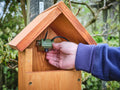
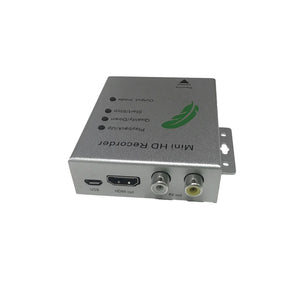
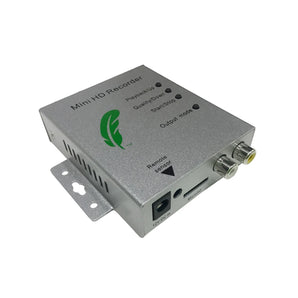
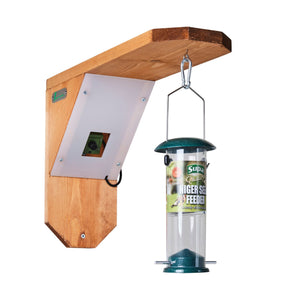
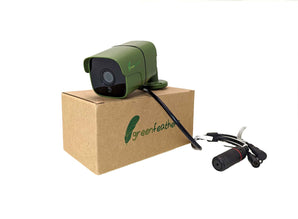
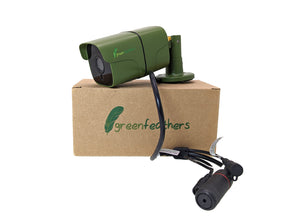
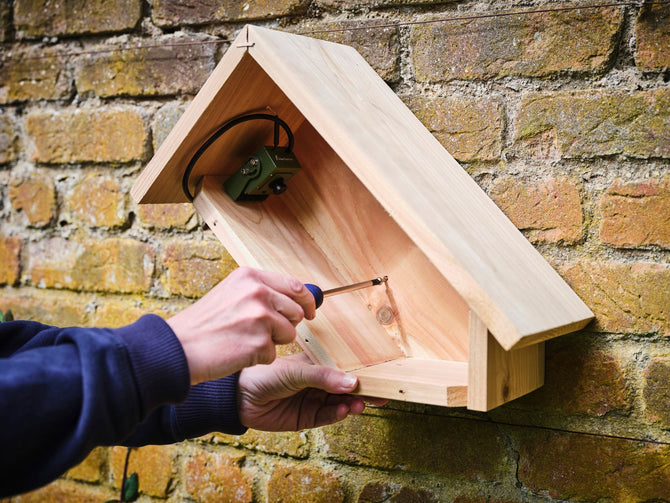
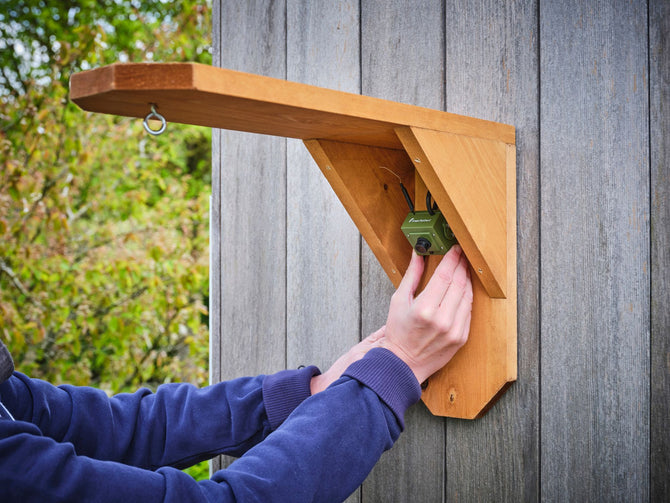
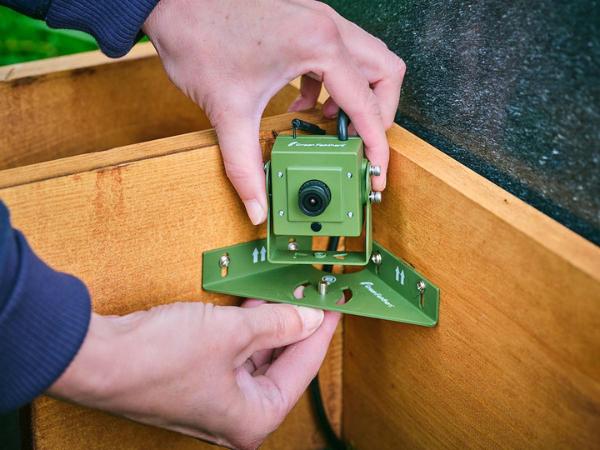
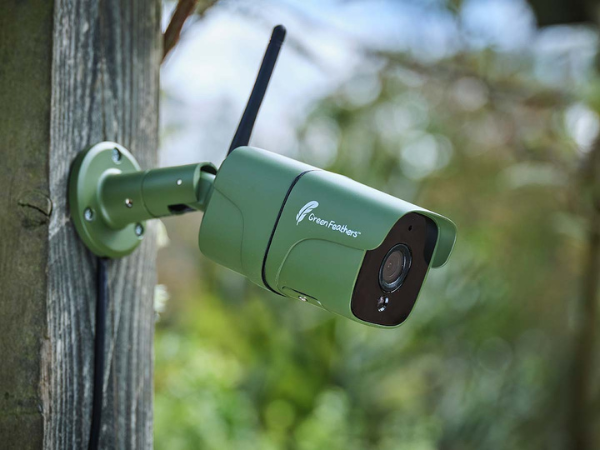
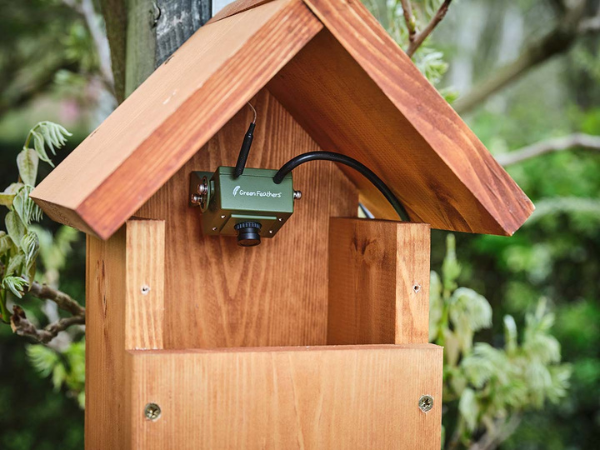
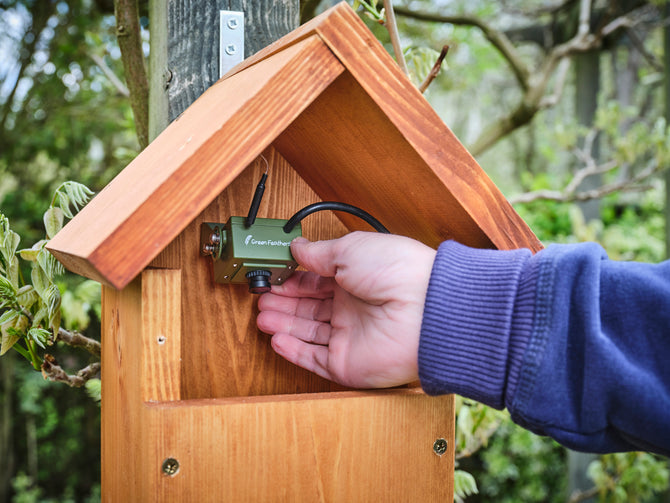
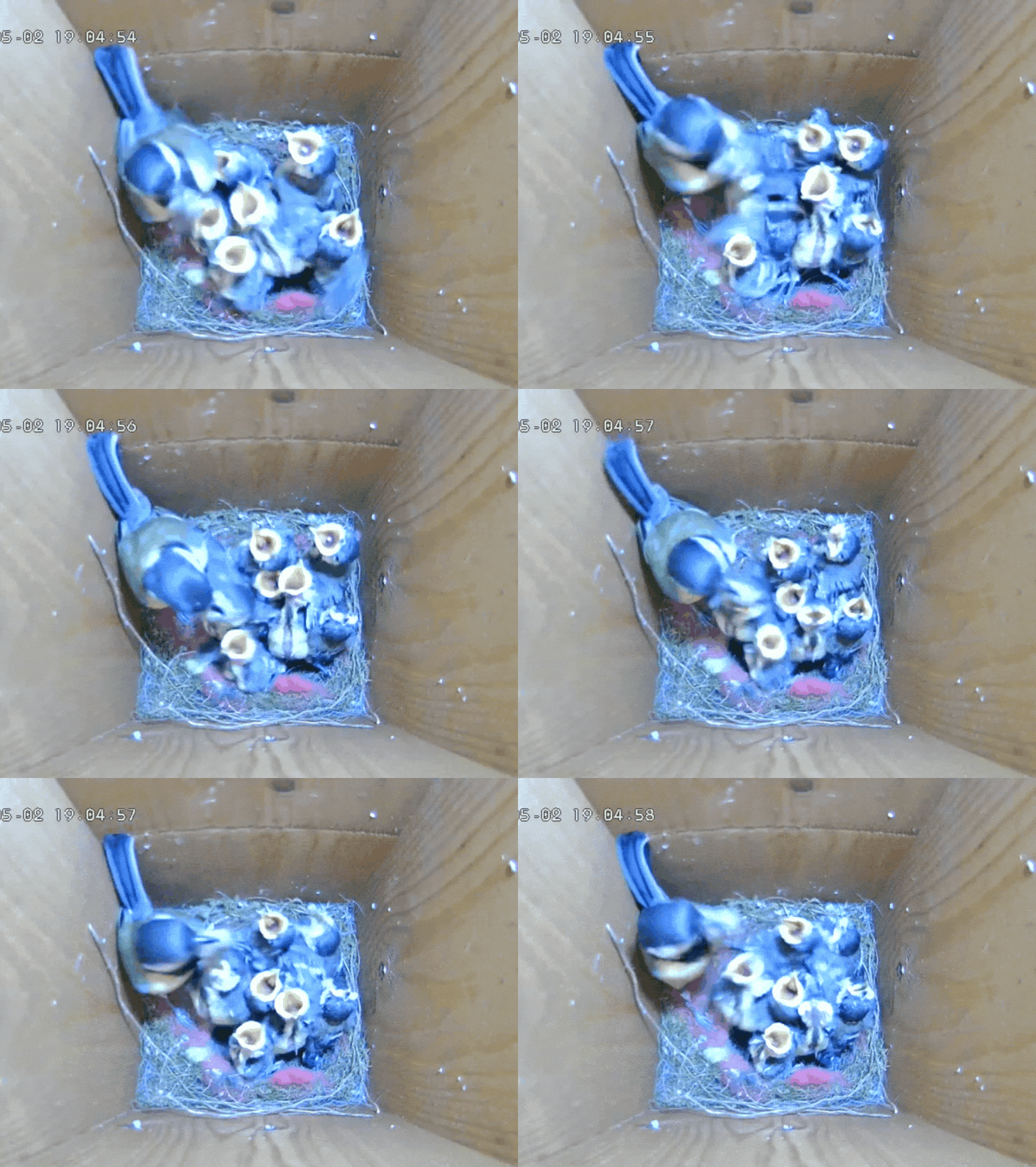
Wildlife cameras and bird box cameras are a great investment for all types of wildlife watching – especially bird watching. You can set the cameras up and observe nests from a distance or from inside a purpose-built bird box, helping you know when it might be safe to go and identify any eggs inside without disturbing the birds.
2. Binoculars
Binoculars are also great for bird- and nest-watching from a distance – especially if you don’t have a camera or somewhere to place one.
3. Magnifying glass
When it’s safe to go and have a peep in a nest, a magnifying glass will be super handy to look closer at all the different features of the bird egg (which we’ll explore in more detail further down).
4. Notebook and pen
A notebook and pen are the perfect tools for noting down your bird egg identifiers, especially if you need to refer to other resources to identify the egg later on. However, if the weather is a little wet and rainy, you could instead use the notes app on your phone instead.
5. Field guide and apps
There are a whole host of different field guides for bird egg and nest identification, from books like A Field Guide to the Nests, Eggs and Nestlings of British and European Birds to apps such as Merlin Bird ID and iNaturalist. These will help you to figure out what kind of bird egg you’ve found, and perhaps even connect with other wildlife enthusiasts like yourself!
How to identify a bird egg

When identifying a bird egg, there are 6 different features you need to look for. These are:
1. Shape
What is the shape of the egg? How would you describe it? Bird eggs are typically oval, elliptical or spherical.
2. Size
How big or small is the egg? Try to estimate the egg size relative to a common object and note it down. If you plan on measuring the egg, try to do so without touching it or the nest.
3. Texture
What does the texture of the egg look like? Is it glossy, matte or rough? You should be able to tell this without touching the egg.
4. Colour
What colour is the egg? Note down the base colour and any unique patterns it has, such as spots or streaks.
5. Clutch size
How many eggs are in the nest? This can vary between species, so it’s an important factor to consider.
6. Nest
The nest itself plays a huge factor in identifying a bird egg. Where is the nest? What materials is it made out of? Observing the adult birds around the nest too can help in your identification.
In depth: British bird egg identification guide

Britain is home to a diverse range of bird species, each with their own unique eggs. Here are some common British birds you might come across when nest-watching in the UK and all the details you need to know to identify them.
1. Blackbird (Turdus merula)
-
Egg size: Roughly around 2.9 x 2.1 cm
-
Colour: Pale blue or green with reddish-brown speckles
-
Shape: Oval
-
Texture: Smooth and glossy
-
Clutch size: 3-5 eggs
-
Nest location: Low shrubs, hedges or trees, occasionally on the ground
-
Nest material: Grass, twigs and moss, lined with mud and fine grass
2. Blue Tit (Cyanistes caeruleus)
-
Egg size: Roughly around 1.6 x 1.2 cm
-
Colour: White with fine reddish speckles
-
Shape: Rounded oval
-
Texture: Smooth
-
Clutch size: 7-12 eggs
-
Nest location: Tree holes, nest boxes, or crevices
-
Nest material: Moss, feathers, and animal hair
3. Robin (Erithacus rubecula)
-
Egg size: Roughly around 2.0 x 1.5 cm
-
Colour: White with reddish spots or mottling
-
Shape: Roundish oval
-
Texture: Smooth
-
Clutch size: 4-6 eggs
-
Nest location: Sheltered spots like hedges, ledges or even unusual places like boots or flower pots
-
Nest material: Moss, leaves and grass, lined with hair or feathers
4. Starling (Sturnus vulgaris)
-
Egg size: Roughly around 2.9 x 2.1 cm
-
Colour: Pale blue, sometimes with brown speckles but often without
-
Shape: Oval
-
Texture: Smooth and slightly glossy
-
Clutch size: 4-6 eggs
-
Nest location: Tree cavities, buildings or nest boxes
-
Nest material: Grass, feathers and leaves
5. Chaffinch (Fringilla coelebs)
-
Egg size: Roughly around 1.9 x 1.5 cm
-
Colour: Pale blue or green, sometimes with brown markings
-
Shape: Oval
-
Texture: Smooth
-
Clutch size: 3-5 eggs
-
Nest location: Forks of trees or shrubs
-
Nest material: Moss, cobwebs and feathers
6. Wood Pigeon (Columba palumbus)
-
Egg size: Roughly around 4.0 x 3.0 cm
-
Colour: Plain white
-
Shape: Elliptical
-
Texture: Smooth
-
Clutch size: 1-2 eggs
-
Nest location: Trees or dense bushes
-
Nest material: Twigs, often loosely constructed
7. Song Thrush (Turdus philomelos)
-
Egg size: Roughly around 2.7 x 2.0 cm
-
Colour: Bright blue with black or purple speckles
-
Shape: Oval
-
Texture: Smooth
-
Clutch size: 3-5 eggs
-
Nest location: Trees, bushes or walls
-
Nest material: Grass, mud and fine roots
8. House Sparrow (Passer domesticus)
-
Egg size: Roughly around 2.3 x 1.5 cm
-
Colour: White or pale grey with brown speckles
-
Shape: Oval
-
Texture: Smooth
-
Clutch size: 3-5 eggs
-
Nest location: Buildings, crevices or birdhouses
-
Nest material: Grass, feathers and scraps
9. Mallard (Anas platyrhynchos)
-
Egg size: Roughly around 5.7 x 4.0 cm
-
Colour: Pale green, cream or off-white (variations can occur)
-
Shape: Elliptical to slightly oval
-
Texture: Smooth and matte
-
Clutch size: 8-13 eggs (but can vary)
-
Nest location: Ground level, in dense vegetation near water, or in concealed locations like hedgerows, reeds or tall grass
-
Nest material: Dry grass, reeds, leaves and down feathers from the female's breast
10. Wren (Troglodytes troglodytes)
-
Egg size: Roughly around 1.6 x 1.2 cm
-
Colour: White or pale cream with fine reddish-brown speckles, often concentrated at the larger end
-
Shape: Oval
-
Texture: Smooth and slightly glossy
-
Clutch size: 5-8 eggs (but occasionally up to 10)
-
Nest location: Crevices in walls, tree roots, hedges, or even boots or cans
-
Nest material: Moss, leaves, grass, webs, feathers and softer materials
11. Magpie (Pica pica)
-
Egg size: Roughly around 3.4 x 2.4 cm
-
Colour: Pale blue or green with brown blotches
-
Shape: Oval
-
Texture: Smooth
-
Clutch size: 5-7 eggs
-
Nest location: High in trees
-
Nest material: Twigs and mud, often domed
12. Great Tit (Parus major)
-
Egg size: Roughly around 1.7 x 1.3 cm
-
Colour: White with reddish speckles
-
Shape: Oval
-
Texture: Smooth
-
Clutch size: 5-12 eggs
-
Nest location: Tree holes, nest boxes or crevices
-
Nest material: Moss, feathers and hair
13. Dunnock (Prunella modularis)
-
Egg size: Roughly around 1.9 x 1.4 cm
-
Colour: Bright blue and unmarked
-
Shape: Oval
-
Texture: Smooth and slightly glossy
-
Clutch size: 3-6 eggs
-
Nest location: Dense hedges, shrubs or climbing plants
-
Nest material: Moss, grass and twigs, lined with hair or feathers
14. Goldfinch (Carduelis carduelis)
-
Egg size: Roughly around 1.8 x 1.3 cm
-
Colour: Pale blue or white with fine reddish-brown speckles
-
Shape: Oval
-
Texture: Smooth
-
Clutch size: 4-6 eggs
-
Nest location: High up in trees, shrubs or garden hedges
-
Nest material: Moss, grasses, lichens and plant fibres, lined with thistle down or wool
15. Long-tailed Tit (Aegithalos caudatus)
-
Egg size: Roughly around 1.4 x 1.1 cm
-
Colour: White with fine reddish-brown speckles
-
Shape: Rounded oval
-
Texture: Smooth
-
Clutch size: 6-12 eggs
-
Nest location: Dense hedges, shrubs or low trees
-
Nest material: Moss, lichens and spider silk, lined with thousands of feathers
16. Coal Tit (Periparus ater)
-
Egg size: Roughly around 1.5 x 1.2 cm
-
Colour: White with reddish-brown speckles
-
Shape: Oval
-
Texture: Smooth and glossy
-
Clutch size: 7-12 eggs
-
Nest location: Tree holes, nest boxes or wall crevices
-
Nest material: Moss, spiders’ webs, hair and feathers
17. Pied Wagtail (Motacilla alba)
-
Egg size: Roughly around 2.1 x 1.5 cm
-
Colour: Pale grey or cream with darker grey and brown speckles
-
Shape: Oval
-
Texture: Smooth and glossy
-
Clutch size: 4-6 eggs
-
Nest location: Building ledges, bridges, walls or cavities
-
Nest material: Grass, moss and roots, lined with hair and feathers
18. Jackdaw (Coloeus monedula)
-
Egg size: Roughly around 3.5 x 2.5 cm
-
Colour: Pale blue or bluish-green with brown or grey speckles
-
Shape: Oval to elliptical
-
Texture: Smooth
-
Clutch size: 4-6 eggs
-
Nest location: Chimneys, tree cavities or buildings
-
Nest material: Twigs, grass, moss, wool and hair
19. Carrion Crow (Corvus corone)
-
Egg size: Roughly around 4.3 x 3.0 cm
-
Colour: Pale blue-green with brown and grey blotches
-
Shape: Oval
-
Texture: Smooth and glossy
-
Clutch size: 3-7 eggs
-
Nest location: Tall trees, cliffs, old buildings or pylons
-
Nest material: Large twigs, bark, moss and hair
20. Nuthatch (Sitta europaea)
-
Egg size: Roughly around 2.0 x 1.5 cm
-
Colour: White with reddish-brown speckles, usually concentrated at the larger end
-
Shape: Oval
-
Texture: Smooth and glossy
-
Clutch size: 6-8 eggs
-
Nest location: Tree cavities, old woodpecker nests or nest boxes
-
Nest material: Bark flakes, dead leaves and wood chips
21. Tree Sparrow (Passer montanus)
-
Egg size: Roughly around 2.0 x 1.4 cm
-
Colour: White to pale grey with brown speckles
-
Shape: Oval
-
Texture: Smooth and slightly glossy
-
Clutch size: 4-6 eggs
-
Nest location: Tree holes, nest boxes or crevices in buildings
-
Nest material: Grass, straw, feathers and moss
22. Collared Dove (Streptopelia decaocto)
-
Egg size: Roughly around 3.1 x 2.4 cm
-
Colour: Plain white
-
Shape: Elliptical
-
Texture: Smooth and glossy
-
Clutch size: 2 eggs
-
Nest location: Trees, shrubs, gutters or building ledges
-
Nest material: Thin platform of twigs and roots
23. Moorhen (Gallinula chloropus)
-
Egg size: Roughly around 4.3 x 3.0 cm
-
Colour: Greyish-white or cream with reddish-brown speckles
-
Shape: Oval
-
Texture: Smooth and slightly glossy
-
Clutch size: 6-10 eggs
-
Nest location: Among reeds or dense vegetation beside water
-
Nest material: Reeds, grasses and aquatic plants
24. Coot (Fulica atra)
-
Egg size: Roughly around 5.3 x 3.6 cm
-
Colour: Buff or stone-coloured with dark brown and black speckles
-
Shape: Oval
-
Texture: Smooth and slightly glossy
-
Clutch size: 6-10 eggs
-
Nest location: Floating nests in reeds or other waterside vegetation
-
Nest material: Reeds, rushes and other aquatic plants
25. Swift (Apus apus)
-
Egg size: Roughly around 2.5 x 1.6 cm
-
Colour: Plain white
-
Shape: Elongated oval
-
Texture: Smooth
-
Clutch size: 2-3 eggs
-
Nest location: Roof spaces, buildings or purpose-built swift boxes
-
Nest material: Feathers and plant material collected in flight and bound together with saliva
26. Swallow (Hirundo rustica)
-
Egg size: Roughly around 2.0 x 1.4 cm
-
Colour: White or pale pink with reddish-brown speckles
-
Shape: Oval
-
Texture: Smooth
-
Clutch size: 4-6 eggs
-
Nest location: Barns, stables, sheds or under eaves
-
Nest material: Mud reinforced with grass and straw and lined with feathers or hair
27. House Martin (Delichon urbicum)
-
Egg size: Roughly around 1.9 x 1.3 cm
-
Colour: Plain white
-
Shape: Oval
-
Texture: Smooth
-
Clutch size: 3-5 eggs
-
Nest location: Mud nests attached beneath the eaves of buildings
-
Nest material: Mud pellets lined with grass and feathers
28. Barn Owl (Tyto alba)
-
Egg size: Roughly around 4.0 x 3.2 cm
-
Colour: Plain white
-
Shape: Rounded oval
-
Texture: Smooth with a slightly matt finish
-
Clutch size: 4-6 eggs (but can be more in good years)
-
Nest location: Barns, church towers, hollow trees or nest boxes
-
Nest material: Little to no nesting material, with eggs laid on accumulated pellets and debris
29. Tawny Owl (Strix aluco)
-
Egg size: Roughly around 4.8 x 3.9 cm
-
Colour: Plain white
-
Shape: Rounded oval
-
Texture: Smooth and slightly glossy
-
Clutch size: 2-5 eggs
-
Nest location: Tree cavities, abandoned crow nests or nest boxes
-
Nest material: Very little nesting material, with eggs laid directly on wood dust or debris
30. Kingfisher (Alcedo atthis)
-
Egg size: Roughly around 2.5 x 2.0 cm
-
Colour: Glossy white
-
Shape: Rounded oval
-
Texture: Smooth and glossy
-
Clutch size: 5-7 eggs
-
Nest location: Burrows dug into riverbanks or sandy banks
-
Nest material: No nesting material, with eggs laid on fish bones and pellets that accumulate in the nesting chamber
31. Grey Heron (Ardea cinerea)
-
Egg size: Roughly around 6.0 x 4.3 cm
-
Colour: Pale blue or blue-green
-
Shape: Oval
-
Texture: Smooth with a chalky appearance
-
Clutch size: 3-5 eggs
-
Nest location: Large stick nests high in trees, reedbeds or cliffs
-
Nest material: Large sticks, lined with smaller twigs and vegetation
32. Little Egret (Egretta garzetta)
-
Egg size: Roughly around 4.5 x 3.2 cm
-
Colour: Pale blue-green
-
Shape: Oval
-
Texture: Smooth with a chalky finish
-
Clutch size: 3-5 eggs
-
Nest location: Trees, shrubs or dense reedbeds, often in colonies with other waterbirds
-
Nest material: Twigs, reeds and other vegetation
Bird egg identification by colour
One of the easiest ways to identify British bird eggs is by their colour. Whilst egg colour alone isn’t enough to confirm the species, combining it with the egg’s size, markings, nest location and clutch size can help you narrow down the possibilities.
Blue bird eggs
Several common British birds lay blue eggs, although the shade can vary from pale blue to bright turquoise. Species that lay blue eggs include:
-
Blackbird – pale blue or green with reddish-brown speckles
-
Song Thrush – bright blue with black or purple speckles
-
Starling – pale blue and usually unmarked
-
Dunnock – bright blue and unmarked
-
Jackdaw – pale blue with brown or grey speckles
-
Grey Heron – pale blue or blue-green
White bird eggs
White bird eggs are common among species that nest in enclosed spaces, where camouflage is less important. Species that lay white eggs include:
-
Wood Pigeon – plain white
-
Blue Tit – white with reddish speckles
-
Great Tit – white with reddish speckles
-
Coal Tit – white with reddish speckles
-
House Sparrow – white or pale grey with brown speckles
-
Tree Sparrow – white to pale grey with brown speckles
-
Collared Dove – plain white
-
Barn Owl – plain white
-
Tawny Owl – plain white
-
Kingfisher – glossy white
-
Swift – plain white
-
House Martin – plain white
Green bird eggs
Green eggs are less common but are laid by several familiar UK species. Species that lay green or greenish eggs include:
-
Blackbird – pale green to blue-green with brown speckles
-
Chaffinch – pale green or blue with brown markings
-
Mallard – pale green, cream or off-white
-
Magpie – pale green or blue with brown blotches
-
Little Egret – pale blue-green
-
Grey Heron – pale blue-green
Speckled bird eggs
Many British bird species lay eggs with spots, blotches or streaks, which help camouflage them from predators. Common speckled bird eggs include:
-
Robin
-
Wren
-
Chaffinch
-
Blackbird
-
Blue Tit
-
Great Tit
-
Coal Tit
-
Goldfinch
-
House Sparrow
-
Tree Sparrow
-
Magpie
-
Jackdaw
-
Moorhen
-
Coot
-
Swallow
Bird egg identification by nest location
Another useful way to identify bird eggs is by looking at where the nest is located. Many British birds choose very specific nesting sites, making nest location an important clue when identifying eggs.
Bird eggs found in nest boxes
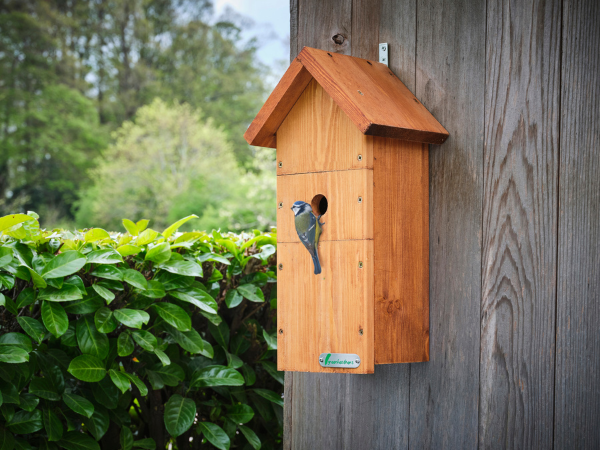
If you've installed a bird box or bird box camera, you're most likely to find eggs from cavity-nesting species such as:
-
Blue Tit
-
Great Tit
-
Coal Tit
-
House Sparrow
-
Tree Sparrow
-
Nuthatch
-
Starling
-
Jackdaw (in larger nest boxes)
-
Barn Owl (in owl boxes)
-
Tawny Owl (in larger owl boxes)
Bird eggs found in hedges and shrubs
Many garden birds build well-hidden nests within hedges and dense shrubs. Common species include:
-
Blackbird
-
Robin
-
Dunnock
-
Wren
-
Goldfinch
-
Chaffinch
-
Long-tailed Tit
-
Collared Dove
Bird eggs found high in trees
Larger birds often nest high above the ground for protection. You may find eggs from:
-
Carrion Crow
-
Magpie
-
Wood Pigeon
-
Grey Heron
-
Little Egret
-
Jackdaw
-
Song Thrush
Bird eggs found on or near the ground
Some British birds nest directly on the ground or in dense vegetation close to it. These include:
-
Mallard
-
Moorhen
-
Coot
Always observe these nests from a safe distance, as they can be particularly vulnerable to disturbance.
Bird eggs found near rivers, lakes and ponds
Wetland birds often nest close to freshwater habitats. Look out for:
-
Mallard
-
Moorhen
-
Coot
-
Grey Heron
-
Little Egret
-
Kingfisher (which nests in burrows dug into riverbanks)
Bird eggs found on buildings
Some species have adapted well to towns and cities, nesting on or inside buildings. Common examples include:
-
House Martin
-
Swallow
-
Swift
-
Pied Wagtail
-
Jackdaw
-
Collared Dove
Frequently asked questions about bird egg identification
Is it legal to collect bird eggs?
No, under the Wildlife and Countryside Act 1981 in the UK, it is illegal to take, possess or intentionally disturb wild birds’ eggs or nests without a licence.
Can two different birds lay eggs in the same nest?
Yes, but it’s uncommon. Certain species are known as “brood parasites” and lay their eggs in other birds’ nests. Occasionally, two females of the same species might share a nest.
Why do some eggs have speckles?
Speckles and markings provide camouflage, especially for ground-nesting birds. Patterns may also help the parent birds identify their own eggs or to strengthen the shell.
How can I tell if a nest is abandoned?
If you worry that a nest has been abandoned, observe from a distance for a while to see if any birds return. Many birds stay away from the nest when humans are nearby. Avoid touching the eggs or disturbing the area.
What should I do if I find a bird's egg on the ground?
If you find an egg on the ground, it’s best to leave it where you found it. Many birds do not abandon eggs due to human scent. If it’s near a nest, you can gently place it back.
How can I identify eggs without disturbing the nest?
To identify bird eggs without disturbing the nest, you can take photos and note details from a safe distance. Use binoculars or a wildlife camera if needed. There are apps and guides available to match egg patterns and characteristics from a distance or after you’ve left the area.
Why are some bird eggs plain white?
White eggs are typical for species that nest in dark or concealed locations (e.g., cavities), where camouflage is less critical.
How long does it take for eggs to hatch?
Incubation periods vary by species. Typically small songbirds take anywhere from 10-14 days, whereas other larger birds can take 20-30 days.
Do all birds incubate their eggs immediately?
Not always. Some species delay incubation until the entire clutch is laid, so the eggs hatch simultaneously.
What bird lays small white eggs with brown speckles?
Several common British birds lay small white eggs with brown or reddish-brown speckles, including Blue Tits, Great Tits, Coal Tits, Robins, Wrens and House Sparrows. Because many species have similarly marked eggs, it’s important to consider other factors such as the nest location, clutch size, habitat and any adult birds nearby before making an identification.
Can egg colour vary within the same species?
Yes! Although each bird species has typical egg colours and markings, natural variation is common. Factors such as genetics, diet and the age of the female can influence the shade or intensity of markings, meaning no two clutches are necessarily identical.
Can you identify a bird from the egg alone?
Not usually. Although the size, shape and colour of an egg provide useful clues, accurate bird egg identification should also take into account the nest, surrounding habitat, nearby adult birds and the time of year. Looking at all of these factors together will give you the best chance of identifying the species correctly.
Which birds lay eggs in nest boxes?
Many cavity-nesting birds readily use nest boxes or bird boxes. In UK gardens, you’re most likely to find Blue Tits, Great Tits, Coal Tits, House Sparrows, Tree Sparrows, Nuthatches and Starlings nesting inside bird boxes. Larger nest boxes may also be occupied by species such as Jackdaws or Barn Owls. Installing a bird box camera is one of the safest ways to observe nesting activity without disturbing the birds.
Why are some bird eggs different sizes?
Bird egg size varies between species and is generally linked to the size of the bird itself. Larger birds, such as Grey Herons and Mallards, lay much larger eggs than smaller garden birds like Wrens or Goldfinches. Even within the same species, egg size can vary slightly depending on factors such as the female’s age, health and environmental conditions.
When is bird egg laying season in the UK?
Most British birds lay their eggs during spring, typically between March and June, although the exact timing varies by species and weather conditions. Some birds, such as Blackbirds and Robins, may raise multiple broods and continue laying eggs into July or even August. If you're hoping to observe nesting birds, read our guide on when British birds start nesting to learn what to expect throughout the breeding season.
When it comes to our feathered friends, we’d like to think we know a thing or two. Check out our blog for more insightful bird identification tips, or contact us today for expert wildlife watching advice.